
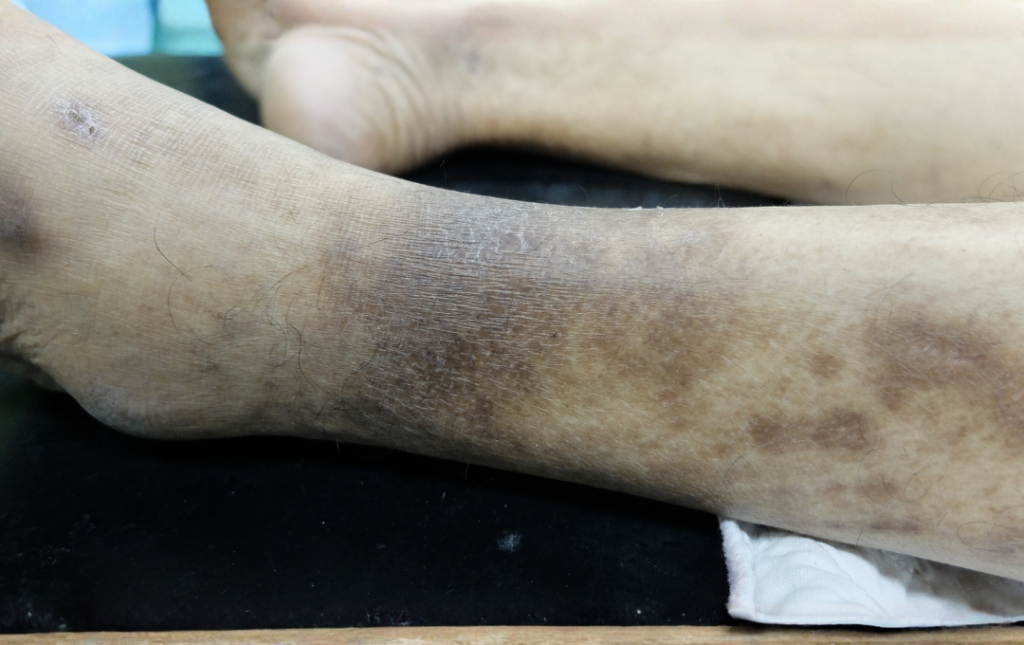
End-stage peripheral artery disease (PAD) is a common type of peripheral vascular disease (PVD) that can pose serious risks to your health. If untreated, this condition can lead to painful symptoms, impaired healing, and an increased risk of limb loss and other complications.
End-stage PAD results from atherosclerosis, in which cholesterol and other fatty substances adhere to artery walls, hardening the arteries. For many patients, symptoms may not appear until the plaque completely blocks blood flow.
Understanding how PAD progresses, what causes it to worsen, and which symptoms signal advanced disease helps explain why timely evaluation and treatment are so important.
The Connection Between End-Stage Peripheral Artery Disease and Vascular Disease
End-stage peripheral artery disease (PAD) and peripheral vascular disease (PVD) may sound similar, but PAD and PVD differ in subtle ways.
End-stage peripheral artery disease is the most serious form of PVD that typically affects the legs. End-stage peripheral vascular disease is an umbrella term for advanced blockages or damage to blood vessels in the arms and legs.
As PAD progresses to its final stages, circulation becomes so limited that tissues no longer receive enough oxygen-rich blood, leading to critical limb ischemia (CLI). This can cause persistent pain at rest, non-healing wounds, and even tissue death. These symptoms signal a severe and urgent loss of blood flow to the legs or feet and require prompt medical evaluation to prevent complications like amputation.
How to Recognize Early-Stage PAD
What Causes End-Stage PAD to Progress?
Atherosclerosis is the most common cause of PAD progression. The buildup of plaque can occur slowly over time and may not initially present symptoms. In fact, many patients remain asymptomatic until they have reached end-stage PAD. This can delay vital diagnoses and treatments, further increasing the risk of complications.
The progression of PAD is classified into different stages:
- Asymptomatic: Plaque buildup is present without symptoms.
- Claudication: Limited blood flow causes pain and cramping in the thighs and calves during physical activity and subsides with rest.
- Critical limb ischemia (CLI): Artery blockage is severe enough to cause chronic leg pain even when resting.
- Acute limb ischemia: A sudden blockage of the arteries that causes tissues in the legs to die, increasing the risk of amputation.
Who’s Most at Risk?
While atherosclerosis is the main cause of PAD, certain factors can increase your risk or contribute to the progression of the disease. These include smoking, high cholesterol, diabetes, high blood pressure, and being over the age of 50. The more risk factors you have, the more likely you are to develop the condition.
Symptoms of End-Stage Peripheral Artery Disease
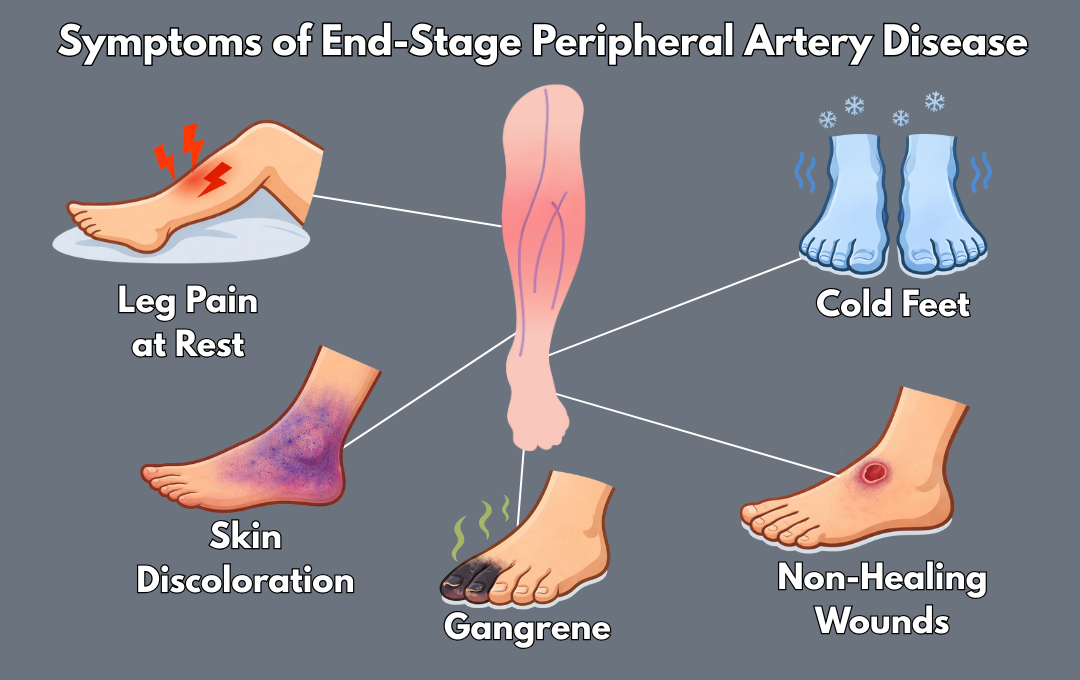
When a patient enters the last stage of PAD, they may encounter severe symptoms that can impact quality of life and increase the risk of amputation. These symptoms include:
- Leg pain that persists even while resting
- Slow- or non-healing wounds
- Blue, purple, or darkening skin discoloration
- Cold or numb legs and feet
- Weak or absent pulse in the legs
- Tissue death (gangrene infection)
PAD is a systemic vascular disease, meaning that it is not isolated to the legs. In fact, the American Heart Association states that end-stage PAD may indicate widespread plaque buildup, which can increase the risk of heart attack, stroke, and amputation. Early intervention and treatment can help prevent these complications.
When to Seek Help for PAD Symptoms
It’s recommended to seek help for PAD as soon as symptoms develop, which include:
- Leg pain or cramping during physical activity that subsides with rest
- Fatigue or weakness in the legs
- One or both legs feel cold
- Shiny skin
- Wounds on the toes, feet, or ankles that don’t heal within six weeks
It’s also recommended to get screened for PAD if you are at risk. If a doctor detects PAD early, the more likely treatment is to be less invasive.
Treatment for End-Stage Peripheral Artery Disease (PAD)
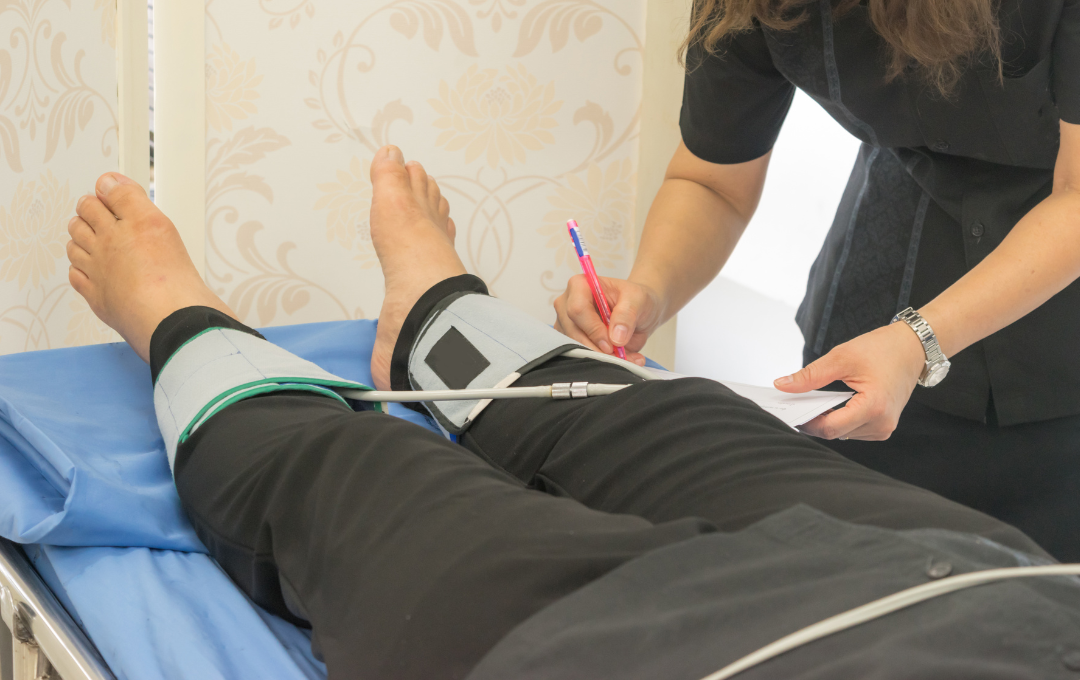
Treatments for end-stage PAD will depend on the patient because, at this stage, it’s not about improving symptoms, but about restoring blood flow to save the limbs. Many patients can qualify for minimally invasive procedures, which only require specialized catheters and ultrasounds to identify arterial blockage and “unclog” it.
Examples of these PAD treatments, which are all offered at USA Vascular Centers, include:
- Angioplasty: A tiny balloon attached to a catheter is inflated to compress plaque against the arterial walls.
- Stent placement: A mesh-like metal tube is inserted into the affected artery to prevent future blockages.
- Atherectomy: Plaque is removed using a laser-tipped catheter.
It should be noted, however, that some patients with end-stage PAD may need more intensive procedures, such as bypass surgery, to improve blood flow. This can also include wound care if the patient develops gangrene. The right treatment will depend on a medical evaluation and recommendation from a qualified vascular specialist.
Once the treatment is received, patients may also be advised to make lifestyle adjustments to further improve their quality of life. This includes supervised exercising, diet changes, and smoking cessation (if applicable).
Expert PAD Care at USA Vascular Centers
End-stage peripheral artery disease is a serious vascular condition, but timely evaluation and appropriate treatment can significantly improve outcomes and quality of life. This begins with experienced providers who understand both the complexity of vascular disease and the importance of early intervention.
USA Vascular Centers offers minimally invasive PAD treatments designed to improve circulation while prioritizing patient comfort and recovery. With a patient-centered approach and a focus on evidence-based care, our specialists help patients take informed steps toward managing PAD and reducing the risk of complications.
We accept most major insurance plans, including Medicare and Medicaid. Appointments can be scheduled online or by calling (888) 773-2193.
FAQs About End-Stage PAD
Can end-stage PAD affect both legs?
End-stage PAD can affect both legs. However, it’s common for symptoms to be more severe in one leg compared to the other.
Is end-stage PAD reversible?
End-stage PAD is not reversible, but it can be treated to prevent the disease from progressing further.
How fast can PAD progress to end-stage?
PAD progresses to end-stage over time, but the amount of time can vary from patient to patient. Factors such as smoking history, age, high blood pressure, high cholesterol, plaque buildup, and conditions like diabetes all influence disease progression.