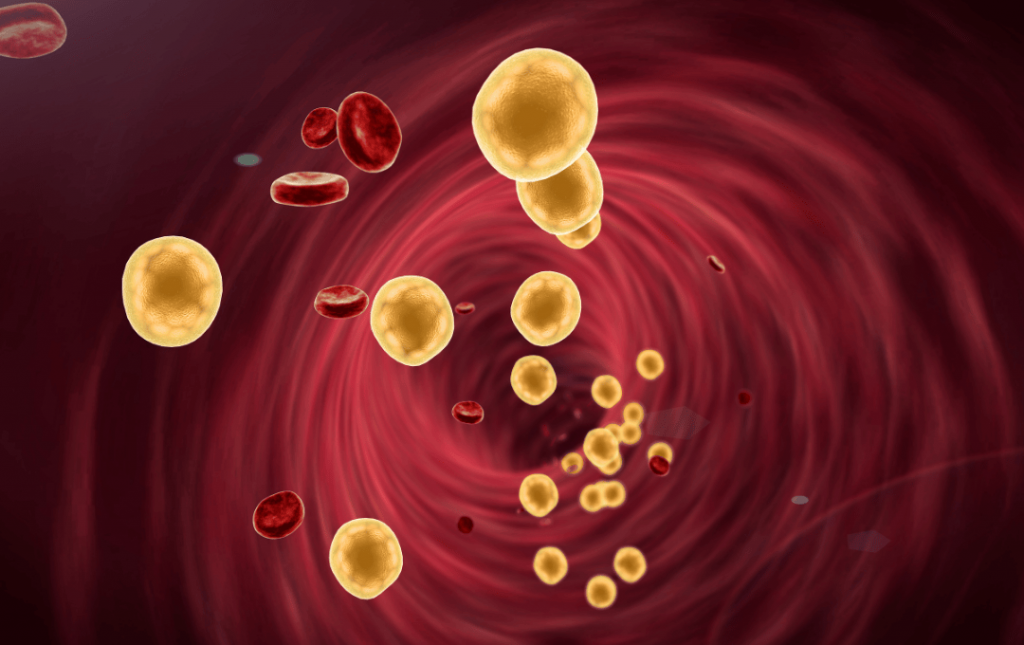
High cholesterol can affect your leg arteries by contributing to plaque buildup inside the artery walls, a process called atherosclerosis. As plaque builds up, arteries can become narrower and blood flow can decrease. When this happens in the legs, it can lead to peripheral artery disease, or PAD. NHLBI says atherosclerosis is the main cause of PAD, and Mayo Clinic notes that PAD is often caused by a buildup of fats, cholesterol, and other substances in and on the artery walls.
That does not mean cholesterol is the only factor involved. PAD risk is also linked to smoking, diabetes, high blood pressure, increasing age, and other cardiovascular risk factors. Still, high blood cholesterol is one of the recognized contributors to plaque buildup and reduced blood flow in the legs. The American Heart Association specifically notes that high cholesterol contributes to plaque buildup in the arteries and can significantly reduce blood flow.
What Happens Inside the Leg Arteries?
Healthy arteries carry oxygen-rich blood to the muscles and tissues in your legs and feet. With atherosclerosis, plaque builds up over time and narrows the opening inside the artery. CDC describes PAD in the legs as a narrowing or blockage of the blood vessels that carry blood from the heart to the legs, primarily caused by fatty plaque buildup.
As the artery narrows, the leg muscles may not get enough blood during activity. That is why PAD commonly causes cramping, aching, heaviness, or fatigue in the legs when walking. Mayo Clinic and the American Heart Association both describe PAD as a circulation problem caused by plaque buildup that reduces blood flow and can trigger leg symptoms with activity.
Why High Cholesterol Matters
Cholesterol becomes a vascular problem when it contributes to plaque formation. Mayo Clinic explains that PAD is often caused by the buildup of fats, cholesterol, and other substances in artery walls, while the American Heart Association identifies high blood cholesterol as a PAD risk factor because it contributes to atherosclerosis.
In plain terms, high cholesterol can help set the stage for arteries in the legs to become narrower and less able to deliver blood efficiently. That reduced blood flow can make it harder for the muscles in your legs to keep up with activity, especially walking or climbing stairs. This is an inference based on the way PAD develops from atherosclerotic narrowing and reduced blood flow.
Can High Cholesterol Cause PAD?
High cholesterol is best understood as a major risk factor and contributor, not the only cause by itself. NHLBI identifies atherosclerosis as the main cause of PAD, and the American Heart Association lists high cholesterol among the risk factors that increase the chances of developing the disease.
That distinction matters. It would be too simplistic to say high cholesterol automatically causes PAD in every person. A more accurate statement is that high cholesterol can promote the plaque buildup that leads to atherosclerosis, and atherosclerosis is the main process behind PAD.
Signs Your Leg Arteries May Be Affected
When plaque buildup reduces blood flow in the leg arteries, symptoms may include:
- cramping, aching, or fatigue in the calves, thighs, or buttocks when walking
- leg pain that improves with rest
- numbness or weakness in the legs
- a colder lower leg or foot, especially on one side
- sores on the toes, feet, or legs that heal slowly
- color changes in the skin of the legs or feet
Not everyone with PAD has noticeable symptoms at first. Some people have mild symptoms, atypical symptoms, or no classic symptoms until the disease is more advanced. That is one reason circulation issues can be overlooked.
High Cholesterol and Leg Pain When Walking
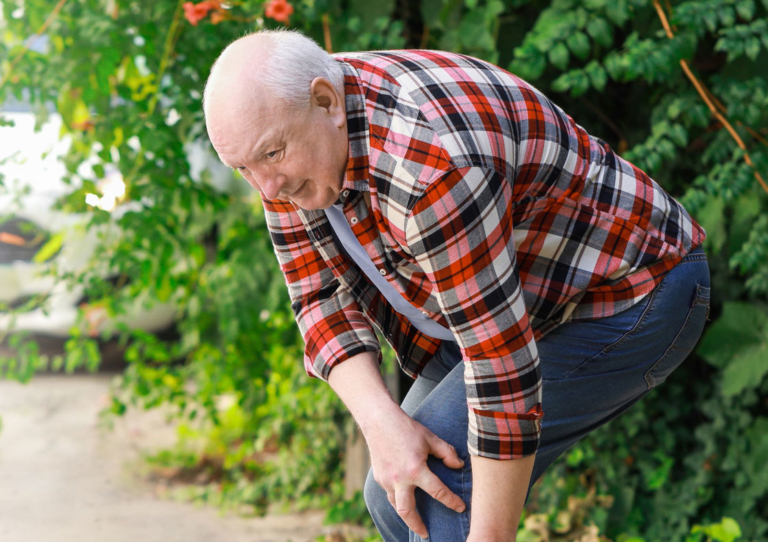
One of the most recognized PAD symptoms is intermittent claudication. This refers to leg cramping or pain that starts with walking and improves with rest. If high cholesterol has contributed to plaque buildup in the leg arteries, reduced blood flow during activity can be part of the reason those symptoms occur. The American Heart Association and Mayo Clinic both describe this walking-related leg discomfort as a common PAD symptom pattern.
This does not mean every leg cramp is caused by cholesterol or PAD. Muscle strain, dehydration, nerve issues, and other conditions can also cause leg pain. But when the pattern is repeatable with walking and rest, reduced circulation deserves consideration.
Other Risk Factors That Work Alongside Cholesterol
High cholesterol often overlaps with other PAD risk factors. According to the American Heart Association, these include smoking, diabetes, high blood pressure, older age, obesity, chronic kidney disease, inactivity, and diets high in saturated fats. CDC and Mayo Clinic also identify related cardiovascular risk factors that can raise concern for atherosclerotic disease.
This is important because vascular risk tends to be cumulative. Someone with high cholesterol plus diabetes or smoking history may face more concern than someone with isolated borderline cholesterol alone. That is an inference from how major sources describe PAD risk as multifactorial.
Can Lowering Cholesterol Help Protect the Leg Arteries?
Managing cholesterol is part of preventing or treating atherosclerotic disease. The American Heart Association says managing cholesterol levels is important to prevent or treat PAD, and Mayo Clinic notes that lifestyle changes and medicines can help manage PAD.
That does not mean lowering cholesterol instantly reverses existing blockage. But it is a meaningful part of protecting artery health and reducing further plaque-related risk. The exact treatment plan depends on the severity of disease, symptoms, and the rest of a person’s health profile.
When Should You Get Checked?
You should consider a vascular evaluation if you have high cholesterol and also notice:
- leg pain or cramping when walking
- symptoms that get better with rest
- cold feet or one foot colder than the other
- numbness or weakness in the legs
- foot or leg wounds that heal slowly
- a history of smoking, diabetes, or other cardiovascular risk factors
A vascular specialist can determine whether your symptoms may be related to PAD and whether further testing is needed. PAD is not just a leg issue; it is also associated with broader cardiovascular risk.
How High Cholesterol Affects Your Leg Arteries: Final Answer
High cholesterol affects your leg arteries by contributing to plaque buildup that can narrow the arteries and reduce blood flow. Over time, that process can play a major role in the development of PAD. While cholesterol is not the only risk factor, it is an important one, especially when combined with smoking, diabetes, high blood pressure, or older age.
If you have high cholesterol and are noticing leg pain with walking, cold feet, numbness, or slow-healing wounds, it may be worth getting checked. A proper evaluation can help determine whether poor circulation may be involved.
FAQs
Can high cholesterol affect your leg arteries?
Yes. High cholesterol can contribute to plaque buildup in the arteries, and when that happens in the legs, it can reduce blood flow and increase the risk of PAD.
What does high cholesterol do to the arteries in your legs?
It can help form plaque along the artery walls, which may narrow the arteries and make it harder for blood to reach the muscles and tissues in the legs.
Can high cholesterol cause leg pain when walking?
It can contribute indirectly by promoting PAD. PAD commonly causes leg cramping or pain with walking that improves with rest.
Is high cholesterol a risk factor for PAD?
Yes. The American Heart Association lists high cholesterol as a PAD risk factor because it contributes to atherosclerosis and reduced blood flow.