

If you are experiencing leg pain, cramping, or worsening discomfort, you’ve likely turned to the web for answers. You might be wondering if your symptoms signal peripheral artery disease (PAD) or a more urgent crisis known as acute limb ischemia. While both conditions involve reduced blood flow to the legs, the critical difference is the timing: PAD typically develops gradually, while acute limb ischemia is a sudden blockage that indicates a medical emergency.
Differentiating acute limb ischemia vs. PAD symptoms can help you determine whether you should schedule a consultation with a vascular specialist or seek immediate care.
Acute Limb Ischemia vs. Peripheral Artery Disease
When comparing acute limb ischemia to peripheral artery disease, the key differences are speed and urgency. One develops over the years, while the other happens in minutes. Looking at each condition side by side makes it easier to ensure you get the right level of care at the right time.
What Is Peripheral Artery Disease?
Peripheral artery disease (PAD) is a condition in which plaque builds up in the arteries, narrowing blood flow to the legs over time. While many patients experience the classic symptom of leg pain while walking, up to 50 percent are asymptomatic. These patients may not be aware they have the condition until the disease progressively worsens.
Signs of PAD
Common PAD symptoms include:
- Leg pain or cramping during activities that ease with rest
- Leg fatigue or heaviness
- Skin changes in the legs, such as hair loss or a “shiny” appearance
- Coldness or numbness in the legs
In advanced stages, plaque buildup may be significant enough to block blood flow to the legs. This can cause leg pain to persist despite resting, a condition known as critical limb ischemia.
Concerned About PAD? Download Our Patient Guide
What Is Acute Limb Ischemia?
Acute limb ischemia, unlike critical limb ischemia, is a sudden decrease in blood flow to a limb, typically caused by a blood clot or abrupt blockage in an artery. This condition needs an urgent evaluation due to the increased risk of limb loss if untreated.
Urgent Warning Signs of Acute Limb Ischemia
Doctors identify acute limb ischemia warning signs as the “six Ps.” If a patient notices the following symptoms, it may indicate a medical emergency:
- Pain in the legs that’s severe and sudden
- Pale or bluish skin
- Pretty cold limbs
- Pulse weakness or absence
- Pins and needles feeling
- Paralysis in the limb
It’s advised to seek urgent medical attention if you experience one or more of these symptoms.
Symptoms of Acute Limb Ischemia vs. PAD
The comparison table below illustrates the most important differences between acute limb ischemia and PAD.
| Acute Limb Ischemia Symptoms | PAD Symptoms | |
| Symptoms | Sudden Onset | Gradual Onset |
| Pain | Pain: Severe during activity and rest | Claudication: Pain and cramping with activity, improves with rest in early stages |
| Skin Changes | None | Glossy skin, hair loss, or thickened toenails |
| Sensation | Tingling, numbness, or a crawling sensation | Numbness or tingling |
| Color Changes | Pale, blue, purple or dark mottled patches | Pale, bluish, or dusky purple discoloration |
| Pulse | Weak or undetectable | Weak in the foot or ankle |
| Motor Function | Paralysis: Cannot move toes or ankle | No sudden loss of movement |
| Wounds/Ulcers | Increased risk of gangrene | Slow-healing sores or chronic wounds in later stages |
| Limbs Temperature | Legs feel very cold | One foot is cooler than the other |
Causes for Acute Limb Ischemia and PAD
Acute limb ischemia and PAD can affect blood flow, but they happen for different reasons.
Causes of Acute Limb Ischemia
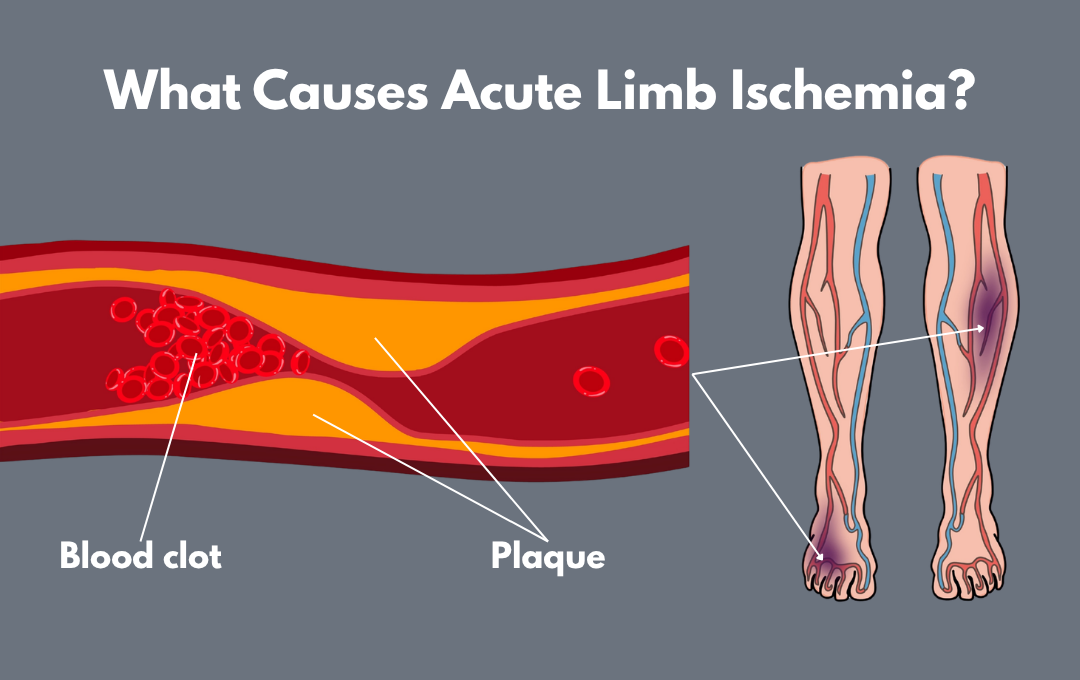
Acute limb ischemia occurs when blood flow to a limb is suddenly blocked. The blockage happens for a few reasons:
- A Clot Forms in a Damaged Artery (Thrombosis): In an artery already narrowed by plaque, the plaque can rupture. This triggers the body to form a clot at that exact spot, which can block blood flow.
- A Clot Travels from Elsewhere (Embolism): A clot forms in another part of the body and travels through the bloodstream. If it reaches a narrowed artery, the blood clot can obstruct the flow, similar to a cork in a bottle.
- Physical Injury or Structural Issues: Blood flow stops because of a direct injury to the artery or a structural problem, such as a bulge or a tear in the artery wall, limiting blood flow.
Causes of Peripheral Artery Disease
Peripheral artery disease (PAD) develops over time as plaque builds up along the arterial walls, gradually restricting blood flow to the legs in a process known as atherosclerosis.
Acute limb ischemia and PAD can affect blood flow, but they happen for different reasons.
Causes of Acute Limb Ischemia
Acute limb ischemia occurs when blood flow to a limb is suddenly blocked. The blockage happens for a few reasons:
- A Clot Forms in a Damaged Artery (Thrombosis): In an artery already narrowed by plaque, the plaque can rupture. This triggers the body to form a clot at that exact spot, which can block blood flow.
- A Clot Travels from Elsewhere (Embolism): A clot forms in another part of the body and travels through the bloodstream. If it reaches a narrowed artery, the blood clot can obstruct the flow, similar to a cork in a bottle.
- Physical Injury or Structural Issues: Blood flow stops because of a direct injury to the artery or a structural problem, such as a bulge or a tear in the artery wall, limiting blood flow.
Causes of Peripheral Artery Disease
Peripheral artery disease (PAD) develops over time as plaque builds up along the arterial walls, gradually restricting blood flow to the legs in a process known as atherosclerosis.
Acute Limb Ischemia and PAD Shared Risk Factors
While acute limb ischemia vs. PAD have different causes, both conditions share similar risk factors, such as:
- Smoking
- Diabetes
- High blood pressure
- High cholesterol
If you have one or more risk factors, our risk assessment quiz can help you determine if you need a vascular screening.
How PAD Can Lead to Acute Limb Ischemia
The risk of acute limb ischemia is higher in patients in the later stages of PAD. As plaque builds up over time, arteries become narrower and less flexible, reducing blood flow and making the vessels more vulnerable to blockage. In this setting, a clot forming or traveling through the bloodstream can fully obstruct circulation.
How Doctors Diagnose Acute Limb Ischemia vs. PAD
Diagnosing acute limb ischemia and PAD begins with a medical history and physical exam. Doctors evaluate pulses, skin temperature, and skin changes to assess circulation. When doctors evaluate PAD, diagnostic testing may include:
- Ankle-brachial index (ABI): A non-invasive test that compares blood pressure in the arms and legs to identify reduced blood flow in the limbs.
- Duplex ultrasound: An advanced imaging exam uses sound waves to visualize blood flow in the arteries.
- Angiography: A specialized dye is injected into the arteries to identify blockages via X-ray.
If acute limb ischemia is suspected, testing is performed urgently—often in the emergency room or hospital—to restore blood flow as quickly as possible and reduce the risk of tissue loss or amputation. This may only include imaging tests due to the urgency of the condition.
Treatments for Acute Limb Ischemia vs. PAD
Treatments for acute limb ischemia and PAD can vary. Because acute limb ischemia is a medical emergency, treatment may involve intensive surgery to remove the clot or redirect blood flow to ensure blood reaches the limbs.
In most cases, PAD is treated conservatively with lifestyle adjustments or outpatient procedures. Medical treatments for PAD are minimally invasive, only involving specialized catheters and advanced medical imaging techniques to open the arteries and restore blood flow. Patients usually experience a significant improvement in quality of life, with less leg pain, improved mobility, and better vascular health.
PAD treatments offered at USA Vascular Centers include:
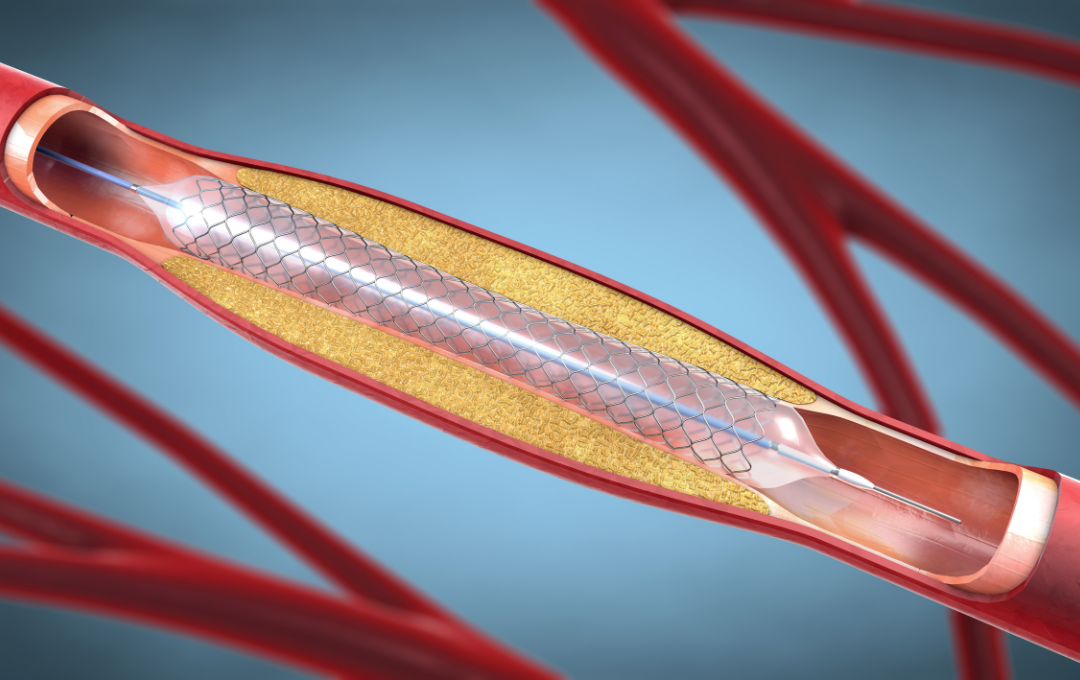
- Angioplasty: a balloon is attached to the end of the catheter and guided to the narrowed artery. The balloon is then inflated, compressing plaque against the arterial walls.
- Stent placement: A small, meshed-metal tube is inserted to widen the artery, preventing future blockages.
- Atherectomy: A laser- or blade-tipped catheter physically removes plaque from the arteries.
The right PAD treatment will depend on the patient’s condition and needs. A vascular specialist can review a patient’s symptoms, medical history, and risk factors before recommending a treatment plan.
How USA Vascular Centers Can Help Keep Your Legs Healthy
USA Vascular Centers specializes in diagnosing and treating peripheral artery disease (PAD) with expert, patient-focused care. Our vascular specialists evaluate symptoms, identify circulation problems, and create personalized treatment plans designed to improve blood flow and support long-term vascular health.
Our treatment centers are recognized by the Accreditation Association for Ambulatory Health Care (AAAHC). This recognition reflects nationally recognized standards for treatment quality and patient safety. Our physicians, many of whom are board-certified, use the latest technology and evidence-based methods to ensure patients receive an accurate diagnosis and appropriate treatment plan.
We accept a wide range of insurance plans. Coverage may vary depending on the insurance plan; however, patients can verify their coverage during the scheduling process to understand what’s needed before the consultation.
If you’re experiencing PAD symptoms, don’t wait—schedule a consultation to start your journey toward better vascular health.
Schedule Your Consultation Today
Frequently Asked Questions
What is the difference between peripheral artery disease and acute ischemia?
The difference between peripheral artery disease (PAD) and acute ischemia is a condition where the arteries in the legs narrow due to plaque buildup. Ischemia is the effect of reduced blood flow to the limb, which can appear suddenly and severely.
What are the signs of acute limb ischemia that suggest a sudden loss of blood flow?
Key signs of acute limb ischemia that suggest a sudden loss of blood flow include sudden leg pain, pale or blue skin discoloration, coldness, numbness, and weakness. These symptoms often appear quickly and require prompt medical attention.
Can walking reduce ischemia?
Walking can help reduce ischemia in the legs and manage symptoms. For acute limb ischemia, talk with your doctor before starting exercise such as walking.