Medically reviewed by
USA Clinics Medical Review Team
Vascular Health Education Experts
Reviewed: November 2026
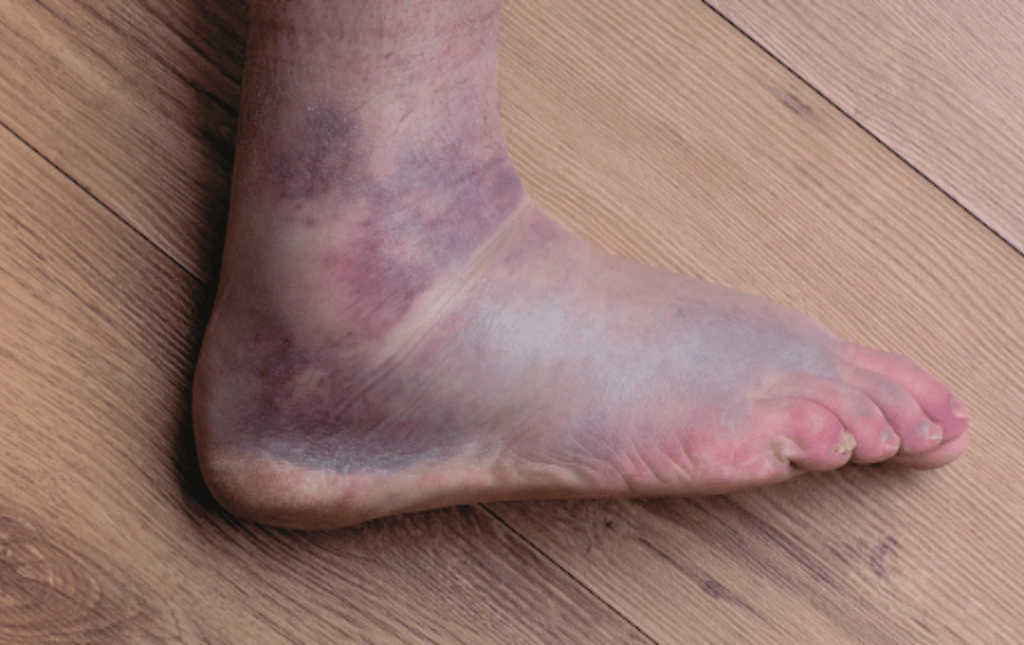
Purple feet are most often a sign that blood is not circulating properly to the lower extremities. The discoloration, known medically as peripheral cyanosis, occurs when tissue is not receiving enough oxygen-rich blood. While some cases are temporary and harmless, persistent or worsening purple coloring in the feet can point to an underlying vascular condition like peripheral artery disease (PAD). Knowing the common causes and recognizing symptoms that warrant medical attention can help protect your circulation before complications develop.
What Does It Mean When Feet Turn Purple?

Feet turn purple when deoxygenated blood pools in the tissue or when oxygen-rich blood is not reaching the feet in adequate quantities. This change in color reflects what is happening beneath the skin’s surface and can range from a brief response to cold temperatures to an indicator of a more serious circulatory condition.
A simple at-home indicator: elevate your feet above heart level for two to three minutes. If the purple color fades noticeably, the cause is likely positional blood pooling. If the color stays the same or the foot turns pale after elevation, reduced arterial blood flow may be contributing and a vascular evaluation is worth considering.
Common Causes of Purple Feet
Several conditions can reduce blood flow to the feet and cause discoloration. The cause determines what, if any, treatment is needed.
Peripheral Artery Disease (PAD)
PAD is caused by plaque buildup in the arteries that supply blood to the legs and feet. As arteries narrow from atherosclerosis, less oxygen-rich blood reaches the lower extremities, and the skin can appear purple, blue, or pale.[1] PAD-related discoloration is often accompanied by leg cramping during activity, cold feet, slow-healing wounds, and reduced hair growth on the lower legs. Leg discoloration caused by poor circulation is one of the more visible early warning signs of this condition.
Acrocyanosis
Acrocyanosis is a persistent but typically benign condition that causes bluish or purple discoloration in the hands and feet due to small blood vessel spasms. It is usually not painful and is not associated with tissue damage. It may become more noticeable in cold environments. New or unexplained persistent discoloration should still be evaluated rather than self-diagnosed.
Raynaud’s Phenomenon
Raynaud’s causes episodes of exaggerated blood vessel constriction triggered by cold temperatures or stress. During an episode, the toes or feet may turn white, then blue or purple, before returning to their normal color. Episodes are usually temporary. When Raynaud’s occurs alongside another medical condition (secondary Raynaud’s), additional evaluation may be needed.
Cold Exposure
Cold temperatures cause blood vessels in the skin to narrow to conserve core body heat. This can make the feet appear pale, blue, or purplish. When the feet warm, the discoloration usually resolves. Persistent discoloration that does not clear with warming warrants evaluation.
Bruising
Bruising from a minor injury can cause localized purple or blue discoloration on the foot. It is typically tender and warm to the touch and confined to the site of trauma, fading over several days as the tissue heals. If you cannot identify an injury that explains the discoloration, or if the affected area feels cold rather than tender, the cause may not be a bruise.
Blood Clots
Deep vein thrombosis (DVT) can cause sudden discoloration in one leg or foot accompanied by swelling, warmth, and pain. DVT is a medical emergency. If you notice sudden purple discoloration in one leg or foot alongside warmth, swelling, or pain, seek emergency medical care immediately rather than scheduling a routine appointment.
Warning Signs That Purple Feet Need Medical Attention
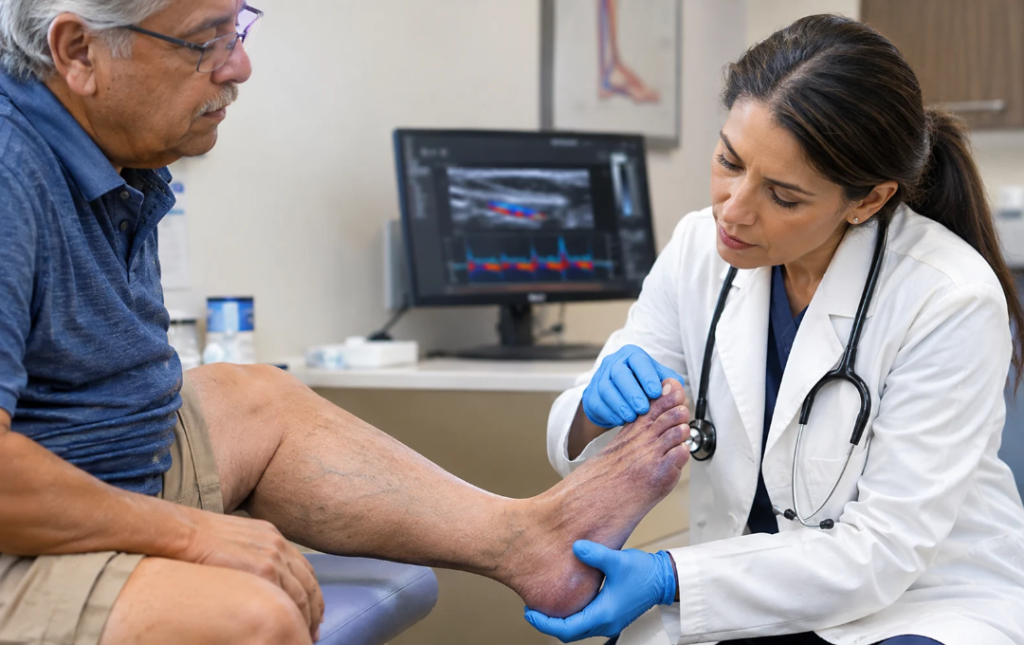
Not all purple feet require emergency care, but persistent discoloration paired with any of the following symptoms is a reason to schedule a vascular evaluation without delay:
- Purple or pale discoloration that does not improve after warmth or elevation
- One or both feet that feel cold to the touch compared to the rest of the leg
- Leg or foot pain that develops with walking and eases with rest (claudication)
- Aching or burning in the feet or toes at night or at rest
- Sores or wounds on the feet that are slow to heal or not healing at all
- Skin that appears darker purple, mottled, or black, particularly in the toes
Changes to the skin on the feet and legs are often among the first visible signs of reduced blood flow from PAD. Learning about PAD-related skin changes can help you distinguish between minor variations and warning signs that need attention.
When Purple Feet May Be Related to PAD
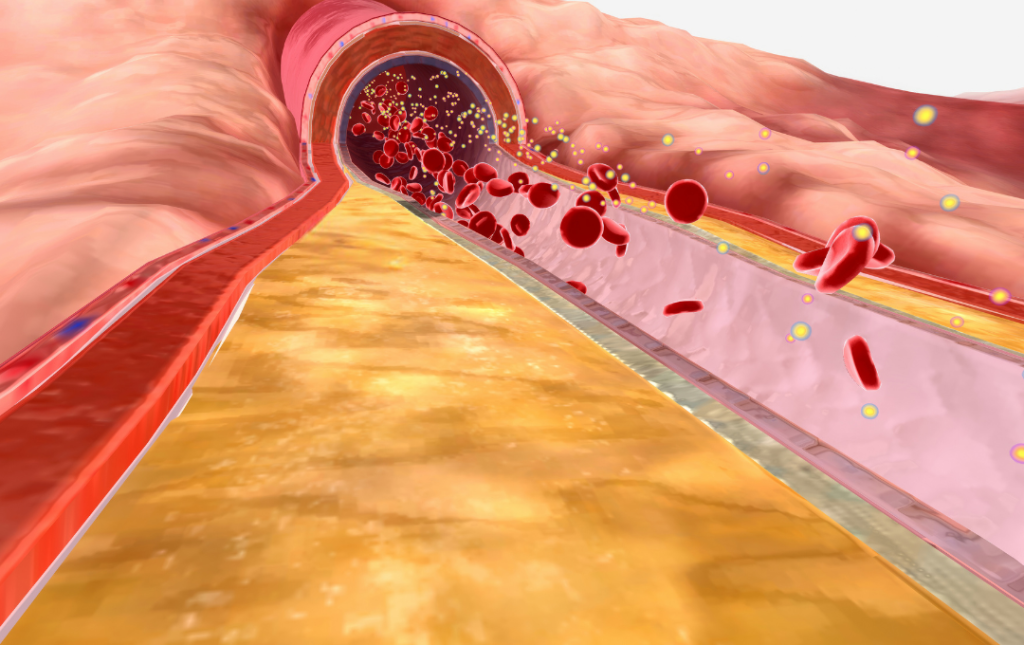
PAD is a progressive condition, meaning symptoms can worsen over time if blood flow continues to decrease. Early-stage PAD may cause only occasional discoloration or mild leg fatigue. As the condition advances, purple or pale coloring in the feet can become more persistent, and other symptoms such as rest pain and non-healing sores may develop.[2]
A vascular specialist can evaluate for PAD using the ankle-brachial index (ABI), a noninvasive test that compares blood pressure at the ankle with that at the arm. A lower reading at the ankle indicates arterial narrowing. Early evaluation may help preserve circulation before complications develop.
If you think your foot discoloration may be circulation-related, reviewing PAD symptoms and risk factors is a helpful first step before scheduling an evaluation.
FAQs About Purple Feet
PAD risk check
Purple Feet Can Be an Early Warning Sign.
Changes in foot color, particularly discoloration that does not resolve with warmth or elevation, may indicate that circulation in the lower extremities is compromised. For many patients, persistent purple feet are among the first signs that a vascular evaluation is worth scheduling.
A vascular specialist can assess whether PAD or another circulation condition may be contributing to your symptoms and outline options tailored to your vascular health.
- National Heart, Lung, and Blood Institute. “Peripheral Artery Disease.” National Institutes of Health. nhlbi.nih.gov/health/peripheral-artery-disease
- Zemaitis MR, Boll JM, Dreyer MA. “Peripheral Arterial Disease.” StatPearls [Internet]. 2023. National Library of Medicine. ncbi.nlm.nih.gov/books/NBK430745/
- American Heart Association. “Peripheral Artery Disease (PAD).” heart.org/en/health-topics/peripheral-artery-disease
Medical disclaimer: This content is provided for educational purposes only and is not a substitute for professional medical advice, diagnosis, or treatment. Always consult a qualified vascular specialist regarding any questions about your circulatory health.