

If you are experiencing leg pain while walking or notice sores that won’t heal, you might be wondering what kind of doctor treats peripheral artery disease. Because PAD involves the circulatory system, many patients assume they should head straight to a heart doctor for peripheral artery disease.
While that is a great starting point, the world of vascular health is highly specialized. PAD is a condition where plaque builds up and restricts blood flow to your limbs. Interventional radiologists (IRs) are among the primary doctors who diagnose and treat it using minimally invasive techniques. Finding the right peripheral artery disease doctor is the first step toward reclaiming your mobility and preventing serious complications.
The Type of Doctors and Specialists Who Treat PAD
When searching for a doctor for peripheral artery disease, you will encounter several different titles. While these professionals overlap in their work, each brings a unique perspective to your care.
At USA Vascular Centers, our peripheral artery disease specialists focus exclusively on the complex network of arteries outside the heart. Many of our physicians are dual-trained or board-certified in both cardiac and vascular specialties, providing them with a comprehensive understanding of your entire circulatory system.
Primary Care Doctor
Your primary care physician (PCP) is usually the first person to hear about your symptoms. While they are not PAD doctors, they can perform an initial physical exam, check for weak pulses in your legs, and order an Ankle-Brachial Index (ABI) test—a simple, non-invasive blood pressure check. Based on these results, they can provide the necessary referral to a specialist for advanced imaging and treatment.
Healthcare providers can refer patients with suspected or diagnosed PAD to USA Vascular Centers for specialized vascular evaluation and minimally invasive treatment. Learn more about our resources and referral options for physicians.
Cardiologist

Many patients wonder, “Do cardiologists treat peripheral artery disease?“ While cardiologists treat the entire cardiovascular system, their primary focus is often the heart. Because PAD is a condition of the peripheral (outer) arteries, an interventional radiologist is uniquely specialized in navigating the complex blood vessels of the legs.
Vascular Specialist & Interventional Radiologist
An interventional radiologist is a vascular specialist who uses advanced imaging (like X-rays and ultrasounds) to see inside your body and treat PAD without large incisions. At USA Vascular Centers, our doctors use these minimally invasive techniques to clear blockages and restore blood flow, allowing patients to recover quickly and go home the same day.
Learn more about how a vascular specialist can help treat PAD, from evaluating circulation problems to recommending treatment for blocked arteries.
Who Should You See First for PAD Symptoms?
If you are wondering what doctor to see for peripheral artery disease, it often depends on your symptoms. If you have classic signs like cramping in the hips or calves (claudication), you should seek out a PAD doctor who specializes in arterial health.
Your doctor for PAD should help with identifying PAD symptoms early, such as coldness in the lower leg or hair loss on the feet, which is key to managing the condition effectively and protecting your long-term mobility.
How PAD Is Tested and Diagnosed
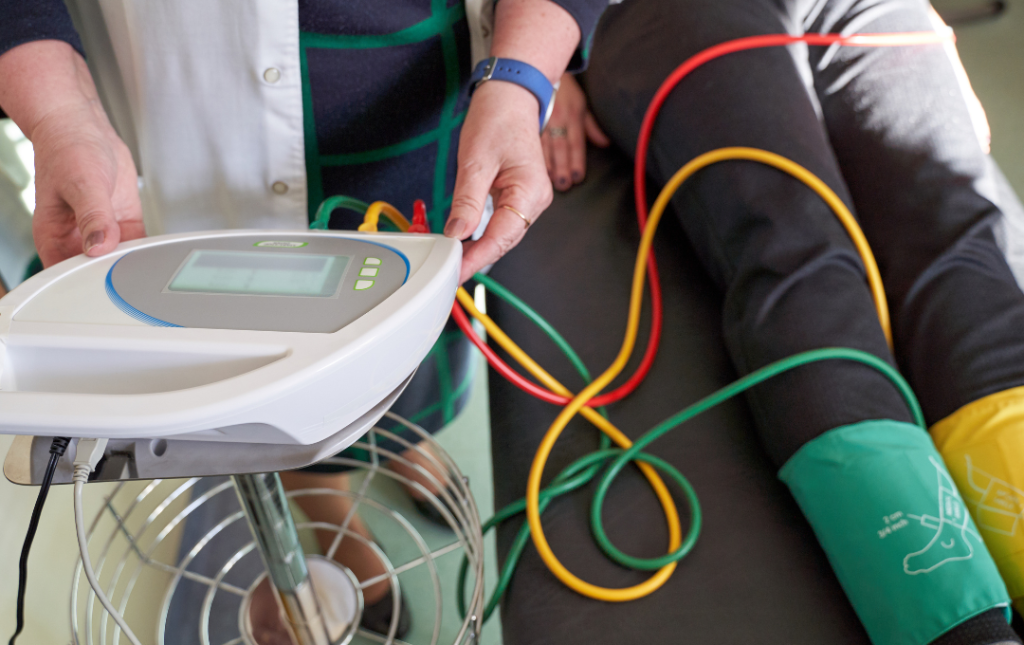
When you ask, “What doctor can diagnose peripheral artery disease?” it’s important to know that a vascular diagnosis involves specific vascular tests that typically include:
- Ankle-Brachial Index (ABI): A quick, painless test comparing the blood pressure in your ankle to the pressure in your arm.
- Doppler Ultrasound: Uses sound waves to “see” the blood flow through your arteries.
- Angiography: Using a special dye and X-rays to find the exact location of a blockage.
Understanding Your Treatment Options
Treatment isn’t just about surgery. A dedicated peripheral artery disease doctor will work with you on a tiered approach:
- Lifestyle Changes: Supervised walking programs and smoking cessation.
- Medication: To manage cholesterol and prevent blood clots.
- Minimally Invasive Procedures: Non-surgical PAD treatments like stenting or atherectomy to physically open the artery.
Find A Peripheral Artery Disease Doctor Near You
When choosing the right type of doctor who treats peripheral artery disease, close to home is ideal, but the right expertise is essential.
Peripheral artery disease (PAD) is a progressive condition, which means your relationship with your doctor will be ongoing. Choosing the right type of doctor who treats peripheral artery disease is about ensuring your care is accessible, consistent, and integrated into your daily life.
The most effective PAD treatments often require multiple visits for monitoring and follow-up. The benefits of having your peripheral artery disease doctor nearby include:
- Routine Monitoring is Easier: Frequent check-ups to track blood flow and limb health become a seamless part of your schedule rather than a day-long ordeal.
- Faster Recovery Support: If you undergo a non-surgical treatment like an angioplasty or atherectomy, having your care team close by provides peace of mind during your initial recovery days.
- Reduced Physical Strain: For many PAD patients, long car rides can trigger leg pain or cramping (claudication). Our local clinics minimize the physical stress of traveling to appointments.
PAD is often linked to other conditions like diabetes, high blood pressure, or heart disease. It is vital to choose a PAD specialist who acts as a partner to your primary care physician (PCP) and existing medical team.
At USA Vascular Centers, we prioritize coordinated care, and the diagnostic results and treatment plan with your regular doctor. This “team-based” approach prevents conflicting medications, reduces redundant testing, and ensures your vascular treatment aligns with your overall health goals.
Expert Care, Right in Your Neighborhood
Choosing the right doctor for PAD is a personal decision. Whether we are in your backyard or a short drive away, choosing a specialized PAD center across our 10-state network ensures you receive a level of care that is equal to none.
FAQs
Do cardiologists treat peripheral artery disease?
Many cardiologists treat peripheral artery disease. However, a vascular specialist or interventional radiologist who focuses exclusively on the peripheral arteries provides a more comprehensive focus, especially for advanced or complex cases of PAD.
Is a referral needed to see a vascular doctor?
Whether you need a referral to see a vascular doctor depends on your insurance provider. Many PPO plans allow you to book directly with a doctor for PAD, while HMOs typically require a referral from your primary care physician.
What does a vascular doctor do on the first visit?
During your first visit, the PAD doctor will review your medical history, perform a physical exam focusing on the pulses in your feet, and likely perform an ABI test to determine the severity of any blockages.