Medically reviewed by
USA Clinics Medical Review Team
Vascular Health Education Experts Reviewed: October 2026
Peripheral artery disease (PAD) can change how your skin looks and feels. These changes often show up before you notice any leg pain. Reduced blood flow to the legs and feet may cause shiny skin, discoloration, dryness, or sores that heal slowly. Spotting these changes early can help you get care before small problems grow into bigger ones. Here is what PAD-related skin changes look like, why they happen, and what may help.
What Is Peripheral Artery Disease?
PAD happens when plaque builds up inside the arteries that carry blood to your legs and feet. As the arteries narrow, less blood reaches your lower body. This reduced blood flow is often behind the skin changes that many people notice first. PAD tends to develop slowly, over many years. That slow pace is part of why skin changes are often an early clue that something is affecting your circulation.
PAD is common, especially in older adults. It can affect younger people too, depending on their health history and lifestyle.
What Does PAD Skin Look Like?
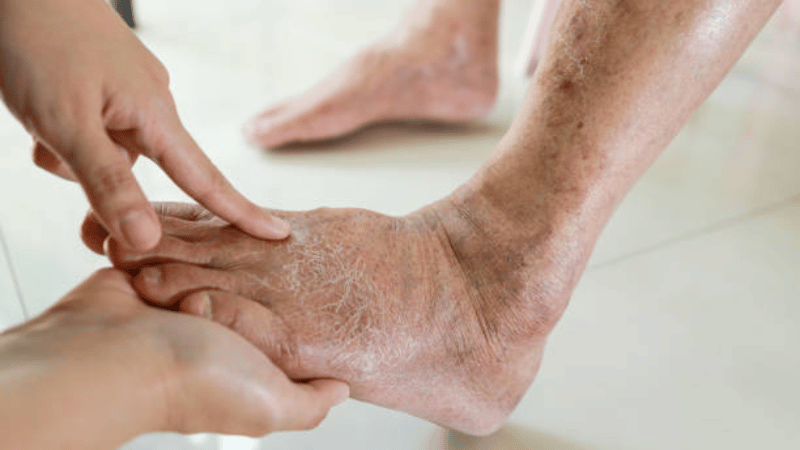
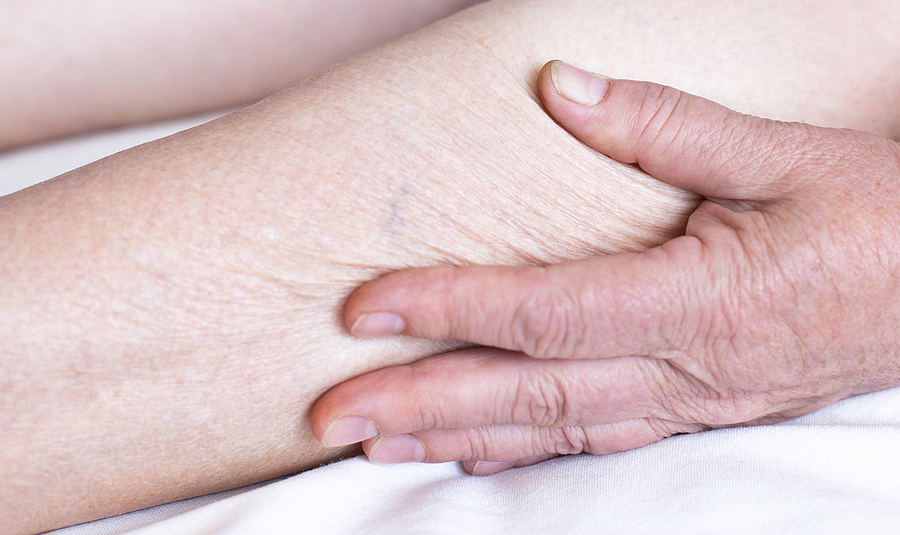
Several changes can show up as blood flow slows down. Skin may look shiny or unusually smooth on the lower legs or feet. It can also show patches of blue, purple, pale, or dark discoloration. Many people notice their skin feels cool to the touch. Sometimes one leg feels colder than the other. Hair on the legs and feet may thin or stop growing. The skin itself can become dry, scaly, or itchy.
Shiny skin on your legs is one of the more noticeable early signs. Reduced blood flow changes how fast skin cells renew themselves.
Three Signs of Peripheral Artery Disease to Watch For
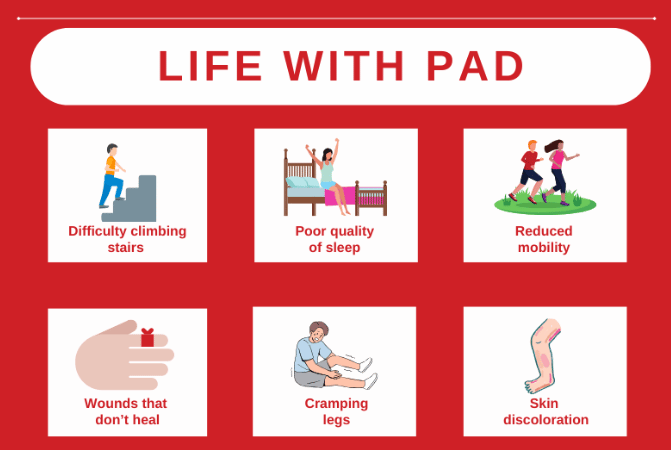
Skin changes are one clue, but PAD often shows up in a few other ways too. Leg pain or cramping that starts with walking and eases with rest is called claudication. This is one of the most common signs. Skin that looks shiny, pale, or discolored is another sign, especially on the lower legs and feet. A third sign is a wound or sore that heals slowly, or does not heal at all.
What Do PAD Sores and Ulcers Look Like?
When blood flow is low for a long time, small injuries like cuts or blisters may not heal well. These sores are sometimes called arterial ulcers. They often appear on the toes, feet, or lower legs. They can look pale, red, yellow, or gray. The skin around them may feel cool. Slow-healing wounds can become more serious over time, so it is worth having non-healing foot ulcers checked by a vascular specialist.
Check your symptoms
See whether reduced blood flow could be behind your skin changes.
A quick PAD risk assessment takes just a few minutes and can help you plan your next step.
Who Is at Risk for PAD?
PAD becomes more common with age. But several other factors can raise your risk too. Smoking, diabetes, high blood pressure, and high cholesterol are among the most common. A family history of vascular disease also raises risk. People who are not very active, or who carry extra weight, may also be more likely to develop PAD over time. You can learn more about who is most at risk for PAD if you want to check your own risk factors.
Can PAD Skin Changes Improve With Treatment?
There is no cure for PAD. But treatment can help manage symptoms, including skin changes, and may slow how fast the condition progresses. Many vascular specialists start with lifestyle changes. These include walking programs, quitting smoking, and managing blood pressure or cholesterol. For more advanced narrowing, minimally invasive PAD treatment options can help. These include angioplasty, stent placement, or atherectomy, which can help restore blood flow to the legs and feet.
Frequently Asked Questions About PAD and Skin Changes
Take action today
Do not wait for skin changes to get worse.
A vascular specialist can help you understand what is behind your symptoms and outline options that fit your circulation.
- Mayo Clinic. “Peripheral artery disease (PAD) – Symptoms and causes.” mayoclinic.org/diseases-conditions/peripheral-artery-disease/symptoms-causes/syc-20350557
- Cleveland Clinic. “Peripheral Artery Disease.” my.clevelandclinic.org/health/diseases/17357-peripheral-artery-disease-pad
- Smith AAH, et al. “Part II: Cutaneous manifestations of peripheral vascular disease.” PMC, National Library of Medicine.
Medical disclaimer: This content is provided for educational purposes only and is not a substitute for professional medical advice, diagnosis, or treatment. Always consult a qualified vascular specialist regarding any questions about your circulatory health.