

Medically reviewed by
USA Clinics Medical Review Team
Vascular Health Education Experts
Reviewed: October 2026
Smoking is one of the biggest risk factors for peripheral artery disease, or PAD. This condition happens when plaque clogs the arteries that carry blood to your legs. Cigarettes expose your blood vessels to chemicals that speed up this buildup. Over time, this raises your risk for leg pain and poor blood flow. If you smoke, here is what the research shows about this link, and what you can do with it.
How Smoking Damages Your Leg Arteries
Cigarette smoke has nicotine, carbon monoxide, and many other harmful chemicals. These chemicals hurt the inner lining of your arteries. This damage speeds up plaque buildup, called atherosclerosis.1 Plaque makes your arteries narrower, so less blood reaches your legs. Over time, this can lead to PAD.
Studies show smoking can raise your PAD risk three to four times. The risk grows with each year you smoke. Even light or occasional smoking can hurt your blood vessels.2
Signs of Clogged Arteries Linked to Smoking
Clogged arteries can build up for years before you feel pain. The most common early sign is claudication, a cramping or aching feeling in your calves, thighs, or hips. It usually starts when you walk and stops when you rest. As PAD gets worse, you may notice cold or pale skin, slow-healing sores on your feet, or numbness in your legs.
If you smoke and notice these changes, a vascular evaluation can help confirm whether PAD is the cause. Learn more about the warning signs of clogged arteries.
Can Quitting Smoking Reverse Clogged Arteries?

Quitting smoking cannot remove plaque that has already built up in your arteries. But it can slow down how fast PAD gets worse, and it may lower your risk of serious problems like heart attack or stroke. One large study looked at people with PAD who quit smoking completely. They had fewer heart and leg problems than people who kept smoking.3
Cutting back on cigarettes alone did not show the same benefit. Quitting fully seems to matter more than cutting back. Learn more about whether PAD can be reversed.
Know where you stand
Your circulation habits matter.
Smoking is one of several things that shape your PAD risk. Age, diabetes, and blood pressure matter too. A short risk assessment can help you understand your own risk.
Treatment Options for Smoking-Related PAD
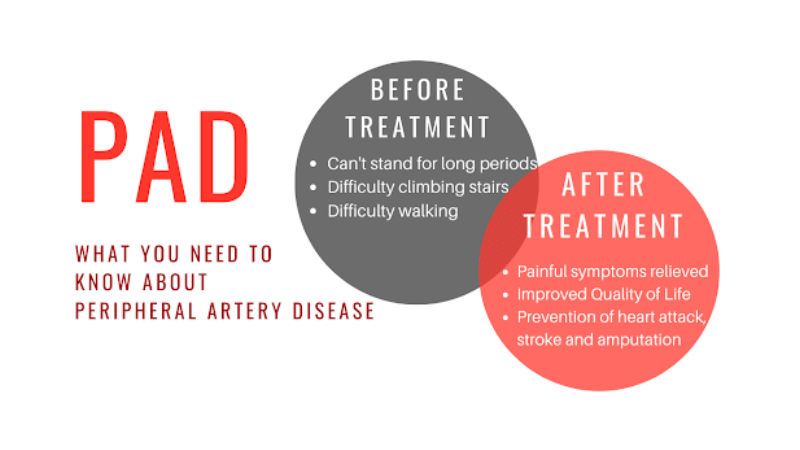
Treatment for PAD often starts with lifestyle changes. These include quitting smoking, walking more, and eating heart-healthy foods. Medicine for cholesterol or blood pressure may also help.
If these steps are not enough, a vascular specialist may suggest a minimally invasive procedure. Options include angioplasty, stent placement, or atherectomy. These help open narrowed arteries and restore blood flow. They do not require open surgery, and most patients go home the same day.
Next step
Smoking raises your PAD risk. You are not without options.
A vascular specialist can check your risk for PAD and talk with you about next steps that fit your health history.
FAQs About Smoking and Peripheral Artery Disease
- National Institutes of Health (NIH), PMC. “A modern day perspective on smoking in peripheral artery disease.” pmc.ncbi.nlm.nih.gov/articles/PMC10175606/
- National Institutes of Health (NIH). “Smoking linked to higher risk of peripheral artery disease in African Americans.” nih.gov/news-events/news-releases/smoking-linked-higher-risk-peripheral-artery-disease-african-americans
- National Institutes of Health (NIH), PMC. “Smoking Behavior and Major Cardiovascular and Limb Events in Patients With Peripheral Artery Disease.” pmc.ncbi.nlm.nih.gov/articles/PMC13491123/
Medical disclaimer: This content is provided for educational purposes only and is not a substitute for professional medical advice, diagnosis, or treatment. Always consult a qualified vascular specialist regarding any questions about your circulatory health.