

Medically reviewed by
USA Clinics Medical Review Team
Vascular Health Education Team
Reviewed: October 2026
Clogged arteries can sometimes play a role in vertigo. Still, vertigo is not a common or direct sign of peripheral artery disease (PAD). PAD happens when plaque narrows the arteries that carry blood to your legs. It is best known for causing leg pain when you walk. Clogged arteries can also affect blood flow in other parts of the body, so it is fair to wonder if poor circulation is behind that spinning, off-balance feeling you keep noticing.
What Is Vertigo, and What Usually Causes It?

Vertigo is a feeling that you, or the room around you, is spinning. Common causes include inner ear problems, certain medicines, anxiety, dehydration, and low blood sugar. Vertigo is a symptom, not a disease on its own. A doctor needs a proper exam to find its cause.
Vertigo falls into two main types, based on where the problem starts.
Peripheral Vertigo
Peripheral vertigo is the most common type. It comes from a problem in the inner ear, the part of your body that helps you stay balanced. Causes include:
- Benign Paroxysmal Positional Vertigo (BPPV) – causes brief, strong vertigo. Tiny crystals shift inside the inner ear. Head movement often triggers it.
- Meniere’s Disease – an inner ear condition that can cause vertigo, ringing in the ears, hearing loss, and ear fullness.
- Labyrinthitis or vestibular neuritis – swelling in the inner ear or its nerve, often from a virus, which can lead to sudden, severe vertigo.
Central Vertigo
Central vertigo is sometimes called vascular vertigo. It starts in the brain. Reduced blood flow often causes it. A stroke or a mini-stroke, called a TIA, can cause it. Migraines and multiple sclerosis can cause it too.
Can Clogged Arteries Cause Vertigo?
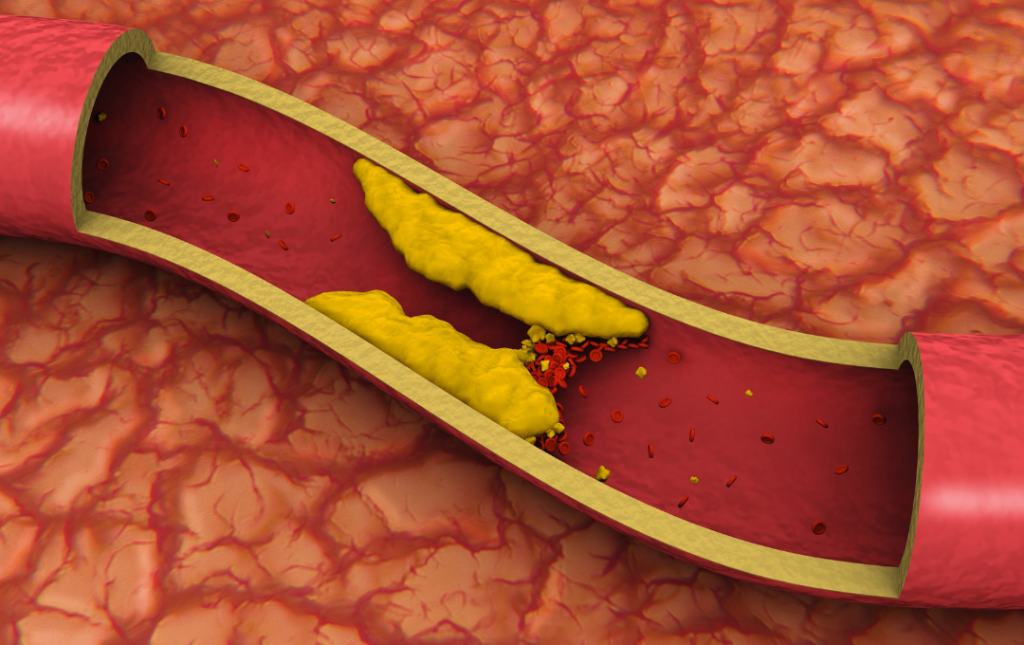
Clogged arteries, also called atherosclerosis, happen when plaque builds up inside artery walls. This narrows the space blood has to flow through. PAD most often affects the legs. But widespread plaque can sometimes reduce blood flow to the brain and inner ear too.
One condition is called vertebrobasilar insufficiency, or VBI. Narrowed arteries limit blood flow to the back of the brain and inner ear. VBI can lead to vertigo. This differs from typical leg-based PAD, and it needs its own evaluation.
On its own, vertigo is not a reliable sign of PAD. But PAD and other forms of narrowed arteries often develop together. If you have vertigo along with leg symptoms, it may be worth discussing with a vascular specialist.
Can Vertigo Be A Symptom of PAD?

Vertigo is not a direct symptom of peripheral artery disease (PAD), which primarily affects leg blood flow. However, PAD and vertigo can overlap in several indirect ways:
-
Transient Ischemic Attack (TIA) / Stroke: Atherosclerosis (artery narrowing) is systemic. If arteries in the legs are clogged, those supplying the brain may be too. Reduced blood flow to the brain’s balance centers can trigger vertigo, and PAD patients face a higher stroke risk.
-
Systemic Atherosclerosis: Widespread vascular disease can restrict blood flow to the brain and inner ear, leading to balance issues.
-
Medication Side Effects: Drugs for PAD, high blood pressure, or cholesterol can cause dizziness or lightheadedness, which patients often mistake for vertigo.
-
Cardiovascular Strain: Poor overall heart and vascular health can contribute to general instability and balance problems.
Signs of Clogged Arteries You Should Not Ignore
Clogged arteries in the legs, the main sign of PAD, tend to show up in specific ways. Knowing these early signs can help you get checked before the condition gets worse. Watch for:
- Leg pain or cramping – happens when walking and eases with rest (claudication).
- Numbness or weakness – in a leg or foot.
- Cold skin – on one leg, compared with the other.
- Slow-healing sores – on the feet or toes.
- Skin changes – shiny, hairless skin or color changes on the lower legs.
You can read more in our guide to the warning signs of clogged arteries.
Know your risk
Not sure if narrowed arteries are behind your symptoms?
Our quick PAD Risk Assessment can help you see whether your symptoms, including leg pain or changes in circulation, line up with common PAD risk factors.
When to See a Vascular Specialist About Dizziness

Most dizziness is not caused by clogged arteries. Still, get checked if dizziness happens often, comes on suddenly, or shows up with any of the leg symptoms above. A vascular specialist can check your circulation with simple, non-invasive tests. These include an ankle-brachial index test and ultrasound. These tests show whether narrowed arteries may be part of the picture.
Knowing your personal risk factors for PAD can help you decide when an evaluation makes sense. It also helps to understand how PAD can affect balance and overall circulation, not just leg comfort.
Seek emergency care right away if dizziness comes with sudden weakness, trouble speaking, or numbness on one side of the body. These can be signs of a stroke.
Frequently Asked Questions
Next step
Understand your PAD risk before symptoms progress.
A vascular specialist can help determine whether narrowed arteries are contributing to your symptoms and outline options tailored to your circulation.
- Mayo Clinic. “Peripheral artery disease (PAD) – Symptoms and causes.” mayoclinic.org/diseases-conditions/peripheral-artery-disease/symptoms-causes/syc-20350557
- Mayo Clinic. “Dizziness – Symptoms and causes.” mayoclinic.org/diseases-conditions/dizziness/symptoms-causes/syc-20371787
- MedlinePlus (National Library of Medicine). “Vertigo-associated disorders.” medlineplus.gov/ency/article/001432.htm
- National Heart, Lung, and Blood Institute. “What Is Peripheral Artery Disease (P.A.D.)?” nhlbi.nih.gov/health/peripheral-artery-disease
Medical disclaimer: This content is provided for educational purposes only and is not a substitute for professional medical advice, diagnosis, or treatment. Always consult a qualified vascular specialist regarding any questions about your circulatory health.