
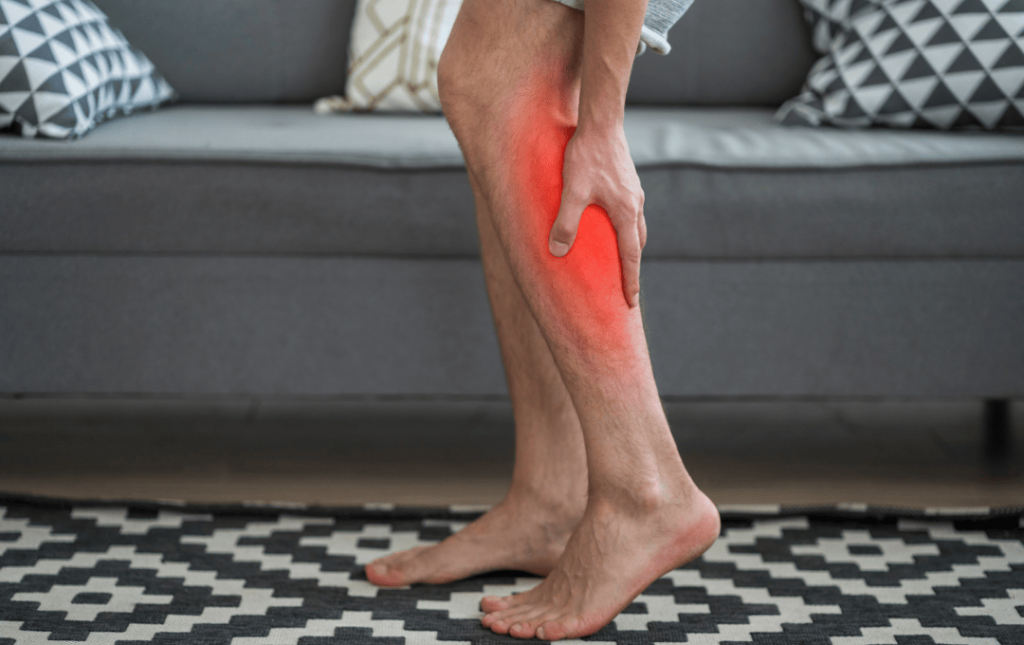
Leg discomfort can happen for many reasons, from muscle soreness after activity to circulation problems that need medical attention. That is why it helps to understand the difference between leg cramping vs. everyday leg pain. While occasional soreness may be related to exercise, overuse, or minor strain, leg cramping that repeatedly starts with walking and improves with rest can be associated with peripheral artery disease (PAD), a condition that reduces blood flow to the legs.
For people trying to decide whether their symptoms are serious enough to get checked, the pattern matters. When discomfort keeps returning during activity, limits walking, or comes with other changes like cold feet or slow-healing wounds, it may be time to see a vascular specialist.
What Is Everyday Leg Pain?
Everyday leg pain is a broad term for common aches and soreness that can happen after exercise, prolonged standing, minor muscle strain, or dehydration. In many cases, this type of discomfort improves as the muscle recovers, with rest, hydration, stretching, or time. Cleveland Clinic notes that leg pain can come from muscle cramps, overuse, dehydration, and certain medications, among other causes.
This does not mean everyday leg pain should always be ignored. However, it is often less concerning when it is clearly linked to a recent workout, an awkward movement, or temporary muscle fatigue.
What Is Leg Cramping From Poor Circulation?
Not all leg cramps come from circulation problems, but one well-known vascular cause is intermittent claudication. This is the most common symptom of lower-extremity PAD. It is often described as cramping, aching, heaviness, fatigue, or discomfort in the calves, thighs, hips, or buttocks that starts when walking, climbing stairs, or exercising and goes away after rest.
The reason this happens is that narrowed arteries reduce blood flow to the leg muscles. During activity, the muscles need more oxygen-rich blood. If circulation cannot keep up with demand, pain or cramping can follow.
Leg Cramping vs. Everyday Leg Pain: Key Differences
Understanding the differences can help you decide when symptoms may need more than home care.
When it happens
Everyday leg pain often follows overuse, a long day on your feet, dehydration, or muscle strain. It may happen after activity or later in the day.
PAD-related cramping usually starts during walking or exercise and improves within minutes of stopping. This repeatable pattern is one of the most important clues.
How it feels
Everyday leg pain may feel sore, tight, tender, or fatigued. Muscle cramps from dehydration or overexertion can also happen suddenly.
Circulation-related cramping is often described as aching, heaviness, fatigue, pain, or cramping in the working muscles of the legs.
What makes it better
Common muscle soreness may improve with stretching, hydration, massage, or general recovery. Cleveland Clinic notes that dehydration, heat, and muscle fatigue are common cramp triggers.
PAD-related leg pain is more likely to improve simply by resting, without needing to change position or stretch the muscle. NHLBI specifically notes that PAD pain is often brought on by exercise and is relieved by rest, while position changes can be more typical of nerve-related pain.
Whether it keeps coming back
Everyday pain may be temporary and improve as the strain or soreness resolves.
PAD-related cramping often follows the same pattern over and over. You walk, the discomfort starts, you rest, it eases, and then it returns when you start walking again.
Signs Leg Cramping May Be More Than a Muscle Issue
Leg symptoms may deserve a vascular evaluation when they are accompanied by signs of poor circulation, such as:
- one foot feeling colder than the other
- pale, bluish, or discolored skin
- slow-healing sores on the feet or legs
- leg weakness with walking
- pain at rest in more advanced cases
These symptoms do not automatically mean you have PAD, but they are not typical of simple post-workout soreness either.
Risk Factors That Make PAD More Likely
Leg cramping is more concerning when it occurs in someone with risk factors for PAD. Mayo Clinic and NHLBI identify smoking, diabetes, high blood pressure, high cholesterol, older age, and cardiovascular disease as important risk factors.
If you have repeated walking-related leg cramps and one or more of these risk factors, it is reasonable to get checked rather than assume it is only muscle fatigue.
When Should You See a Vascular Specialist?
You should consider seeing a vascular specialist if your leg cramping:
- starts when you walk and goes away with rest
- keeps returning with activity
- limits how far you can walk
- is getting worse over time
- happens with cold feet, color changes, or slow-healing wounds
- occurs along with risk factors such as diabetes or smoking history
A vascular specialist can evaluate whether your symptoms may be related to PAD and determine whether additional testing is appropriate.
When Leg Symptoms Are an Emergency
Some symptoms should not wait for a routine appointment. NHLBI advises seeking emergency care right away if you suddenly lose feeling in your foot, cannot move it, and it becomes pale, blue, or colder than the other foot. Sudden severe loss of blood flow can be a medical emergency.
Why This Difference Matters
The reason it is important to separate leg cramping vs. everyday leg pain is that PAD is more than a walking problem. It is a circulation disorder linked to narrowed arteries and broader cardiovascular risk. Mayo Clinic notes that PAD is usually caused by atherosclerosis, the buildup of fatty deposits in the arteries.
That means ongoing leg cramping with walking should not always be brushed off as aging, being out of shape, or dehydration, especially when the pattern is consistent.
Find Out What Is Causing Your Leg Symptoms
If you are trying to tell the difference between leg cramping vs. everyday leg pain, focus on the pattern. Temporary soreness after activity may improve with recovery, but cramping that starts with walking and stops with rest may point to a circulation problem like PAD.
USA Vascular Centers evaluates PAD and other circulation-related concerns. If your leg symptoms keep coming back or are making it harder to stay active, getting checked can help you understand what is causing them and what your next steps may be.
FAQs
Is leg cramping always a sign of PAD?
No. Leg cramps can also happen because of dehydration, heat, muscle fatigue, electrolyte imbalance, or certain medications. But when cramping repeatedly starts during walking and improves with rest, PAD becomes more of a concern.
What does PAD leg pain feel like?
PAD leg pain is often described as cramping, aching, heaviness, fatigue, or discomfort in the calves, thighs, hips, or buttocks during activity. It usually improves after rest.
How is PAD leg pain different from muscle soreness?
Muscle soreness often follows overuse and improves as the muscle recovers. PAD pain is more likely to appear during walking or exercise and ease within minutes of stopping.
When should I worry about leg pain or cramping?
You should take it more seriously if it keeps coming back with walking, limits activity, gets worse over time, or happens with cold feet, skin color changes, or slow-healing sores.