Medically reviewed by
Dr. Imtiaz Ahmad, MD
Interventional Radiologist Reviewed: October 2026
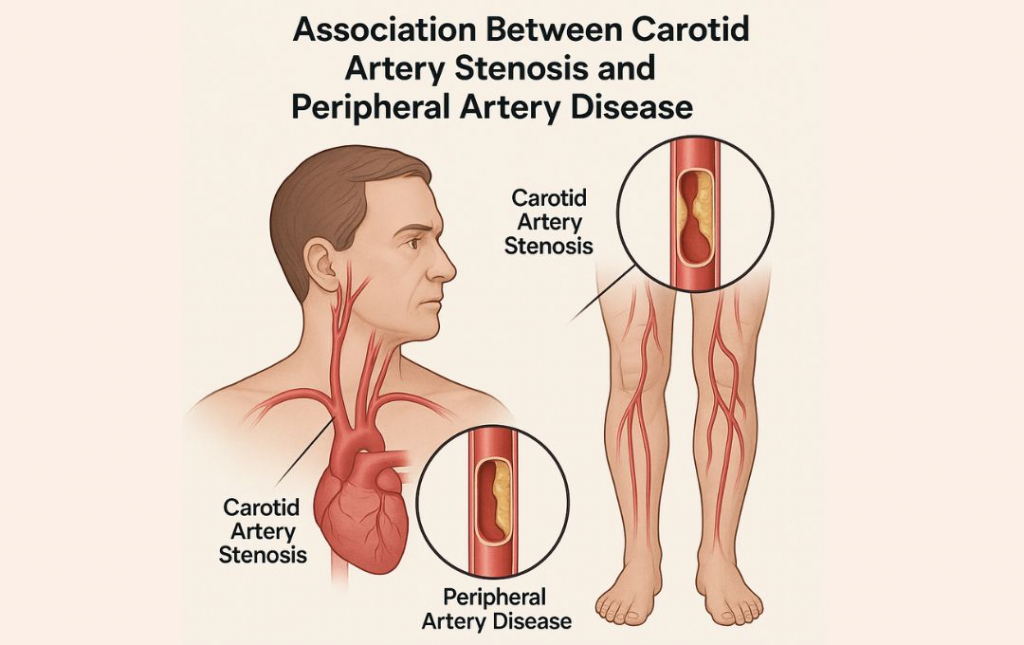
Carotid artery stenosis is the narrowing of the neck arteries that carry blood to the brain. It shares a root cause with peripheral artery disease, or PAD: plaque buildup inside the artery wall. The two conditions often show up in the same patient. Finding one can be the clue that leads a doctor to look for the other. Here is how these two circulation problems overlap, and what that means for your next screening.
What Is Carotid Artery Stenosis?
Carotid artery stenosis happens when plaque narrows the carotid arteries. These are the two large vessels on either side of your neck. They carry oxygen-rich blood to your brain. When they narrow, blood flow drops. The risk of stroke goes up. Many people have no symptoms at all until a stroke or a mini-stroke occurs.
A vascular surgeon or neurologist typically evaluates and manages this condition. USA Vascular Centers focuses on peripheral artery disease, a closely related condition that affects the leg arteries. We cover carotid stenosis here because of how closely the two conditions are linked, not as something we treat directly.
What Causes the Narrowing of the Arteries?
Atherosclerosis is the most common cause. This is the slow buildup of cholesterol, fat, and other substances along the inside of an artery wall. Over time, the buildup narrows the space blood has to flow through. Our guide to common PAD terms covers atherosclerosis and other words you may hear during an evaluation.
Shared Risk Factors With PAD
The same risk factors that lead to carotid narrowing also raise your risk for PAD. Both conditions come from atherosclerosis. These risk factors include smoking, diabetes, high blood pressure, high cholesterol, and a family history of vascular disease.
How Carotid Stenosis and PAD Are Connected
Carotid artery stenosis and PAD are not the same condition. But they are closely related. Both develop when atherosclerosis narrows an artery. The difference is location. PAD affects the legs. The carotid form affects the neck arteries that lead to the brain.
Atherosclerosis tends to affect more than one part of the body at once. This means having one condition raises the odds of having the other. In one study, doctors screened the neck arteries of patients before leg artery surgery.1 Patients with blockages in several leg artery segments had a notably higher rate of significant carotid narrowing. This rate was much higher than in patients with more limited leg artery disease. A separate large screening study found a similar pattern. People with PAD were far more likely to also have narrowed carotid arteries than people without PAD.2
The same plaque buildup that narrows leg and neck arteries can also affect the arteries of the heart. This is one reason doctors view PAD and carotid disease as markers of overall vascular health, not isolated leg or neck problems.
Vascular health check
Lifestyle changes support circulation. They do not reopen a narrowed artery.
Walking, a healthy diet, and quitting smoking can support circulation. These steps may help manage mild PAD symptoms.
A vascular specialist can check if narrowing is affecting blood flow to your legs. A minimally invasive option may help in some cases.
Recognizing the Symptoms of Each Condition
PAD Symptoms: Claudication and Beyond
The hallmark symptom of PAD is intermittent claudication. This is leg pain or cramping that starts with walking and eases with rest. Other signs include numbness, a cold feeling in one leg, and sores on the feet that heal slowly. PAD can also have no symptoms at all in its early stages. Our overview of asymptomatic PAD explains why some people do not notice any warning signs until a screening finds it.
Carotid Narrowing: Often Silent Until a Stroke
This condition often causes no symptoms at all. The first sign may be a transient ischemic attack. This is sometimes called a mini-stroke. It may also be a full stroke. Warning signs include sudden weakness on one side of the body, trouble speaking, or sudden vision loss.
Why Vascular Screening Matters for Both Conditions
An ankle-brachial index test is the most common way to screen for PAD. It compares blood pressure at the ankle with blood pressure in the arm. This shows how well blood is reaching your legs. Doctors typically check for carotid narrowing with an ultrasound instead.
PAD can have no symptoms in its early stages. Some people only learn they have it through a routine vascular screening, sometimes after noticing warning signs of clogged arteries in their legs or feet. If you already have a PAD diagnosis, ask your doctor if a carotid screening makes sense for you. If your carotid arteries show narrowing, an ankle-brachial index test can check for PAD too. Early screening gives you and your doctor more options for managing both conditions before symptoms progress.
Frequently Asked Questions
Next step
Understand your PAD risk before symptoms progress.
A vascular specialist can check whether leg artery narrowing is affecting your circulation. They can outline options tailored to your health. If you have been told you have this condition, ask your doctor about a PAD screening too.
- Kwon JH, et al. “Association between carotid artery stenosis and peripheral artery disease: Evaluation by screening carotid ultrasonography.” Medicine, 2019.
- Rockman CB, et al. “Co-existence of vascular disease in different arterial beds: Peripheral artery disease and carotid artery stenosis. Data from Life Line Screening.” Atherosclerosis, 2015.
- Mayo Clinic. “Carotid artery disease – Symptoms and causes.” mayoclinic.org
- Cleveland Clinic. “Carotid Artery Stenosis: Causes, Symptoms and Treatment.” my.clevelandclinic.org
- Johns Hopkins Medicine. “Carotid Artery Stenosis.” hopkinsmedicine.org
Medical disclaimer: This content is provided for educational purposes only and is not a substitute for professional medical advice, diagnosis, or treatment. Always consult a qualified vascular specialist regarding any questions about your circulatory health.