

Medically reviewed by
Peter L. Smith, M.D.
Diagnostic Radiology, Vascular and Interventional Radiology
Reviewed: October 2026
Tingling or numbness in the legs can have several causes, ranging from brief nerve compression to a circulation problem like peripheral artery disease (PAD). Most people have felt the familiar “pins and needles” that comes from sitting in one position too long. That kind of tingling clears within minutes once you shift position. Persistent or recurring tingling is different – and when it follows a pattern tied to activity, affects one leg more than the other, or comes with signs like cold skin or slow-healing sores, it may point to reduced arterial blood flow rather than a simple nerve issue.
Understanding the difference between tingling caused by nerve compression and tingling caused by poor circulation can help you decide whether a vascular evaluation makes sense. What follows covers the most common causes of leg tingling and numbness, how to recognize when symptoms may be vascular in origin, and what a specialist looks for during an evaluation.
What Causes Tingling and Numbness in Legs?
Several conditions can cause tingling or numbness in the legs. Some are harmless and short-lived. Others reflect an underlying condition that benefits from evaluation.
Temporary Causes That Resolve on Their Own
Crossing your legs, sitting for a long time without shifting position, or sleeping with pressure on your leg can compress nerves temporarily and create a tingling or numb sensation. This kind of paresthesia – the clinical term for abnormal sensations like tingling, prickling, or numbness – typically clears quickly once you remove the pressure. It is common and not a cause for concern when it resolves within a few minutes.
Peripheral Neuropathy
Peripheral neuropathy occurs when the nerves outside the brain and spinal cord become damaged. Diabetes is one of the most common causes, though vitamin deficiencies (particularly B12, B6, and B1), certain medications, and autoimmune conditions can also contribute.[3] Neuropathy-related tingling often starts in both feet and works upward into the legs over time. It tends to be fairly constant rather than tied specifically to physical activity, and it may feel worse at night.
Peripheral Artery Disease (PAD)
Peripheral artery disease (PAD) develops when plaque builds up inside the arteries that carry blood to the legs. As the arteries narrow, less oxygen-rich blood reaches the muscles and nerve tissue. This reduction in blood flow can cause tingling, numbness, cramping, or aching – symptoms that often build during physical activity and ease with rest, particularly in earlier stages of the disease.[1]
PAD-related tingling may affect one leg more than the other, depending on which artery has narrowed. It can also be accompanied by cold skin, pale or discolored skin, or reduced hair growth on the lower leg. In more advanced cases, symptoms may occur even at rest. Our guide on what tingling in the legs can mean provides more context on how PAD affects nerve function in the lower extremities.
Nerve Compression and Sciatica
Compression of the sciatic nerve – which runs from the lower back through each leg – can cause tingling, numbness, or shooting pain that travels down one leg. A herniated disc, spinal stenosis, or injury to the lumbar region is often the cause. Sciatic nerve symptoms usually track along a specific nerve pathway and are frequently accompanied by lower back pain or discomfort that changes with posture or movement.
How to Tell If Leg Tingling Is Vascular or Nerve-Related
The pattern of your symptoms offers important clues about whether reduced blood flow or nerve involvement is more likely. No single symptom confirms a diagnosis – that requires evaluation – but timing and accompanying signs can help distinguish one from the other.
Symptoms That Point to a Circulation Issue
- Tingling or cramping that starts consistently when you walk or climb stairs, then improves within a few minutes of resting (a pattern called claudication)
- Symptoms that affect one leg more than the other
- Cold skin on one leg or foot compared to the other
- Pale, shiny, or discolored skin on the lower leg or foot
- Slow-healing sores or wounds on the foot or lower leg
- Tingling or numbness that occurs at rest, particularly at night, in more advanced cases
These signs may be associated with arterial narrowing and are worth discussing with a vascular specialist. For a closer look at the activity-linked pattern, see our article on legs tingling after walking.
Symptoms That Point to Nerve Involvement
- Tingling that is fairly constant and not closely linked to walking or activity
- Burning or sharp pain that radiates from the lower back down the leg
- Symptoms in both feet and legs simultaneously, often progressing upward over time
- Tingling that changes or worsens with posture, especially when sitting or bending forward
- Associated lower back pain, muscle weakness, or bladder and bowel changes
Both conditions can coexist. Diabetes is a risk factor for both peripheral neuropathy and PAD, so some patients experience symptoms from both simultaneously. A detailed comparison is available in our article on neuropathy vs PAD.
Warning Signs That Need Prompt Evaluation
Not all leg tingling requires urgent care, but certain patterns suggest that evaluation should not be delayed. A vascular evaluation is worth scheduling when tingling or numbness:
- Occurs consistently during walking and reliably eases with a few minutes of rest
- Is accompanied by visible changes in skin color, temperature, or texture on the lower leg or foot
- Comes with slow-healing or non-healing wounds on the foot or ankle
- Is persistent rather than occasional
- Affects one leg noticeably more than the other without an obvious cause
- Has been worsening progressively over weeks or months
If tingling begins suddenly and is accompanied by weakness on one side of the body, trouble speaking, or facial drooping, seek emergency care immediately – these may be signs of a stroke and require urgent evaluation.
How Vascular Specialists Evaluate Leg Tingling and Numbness
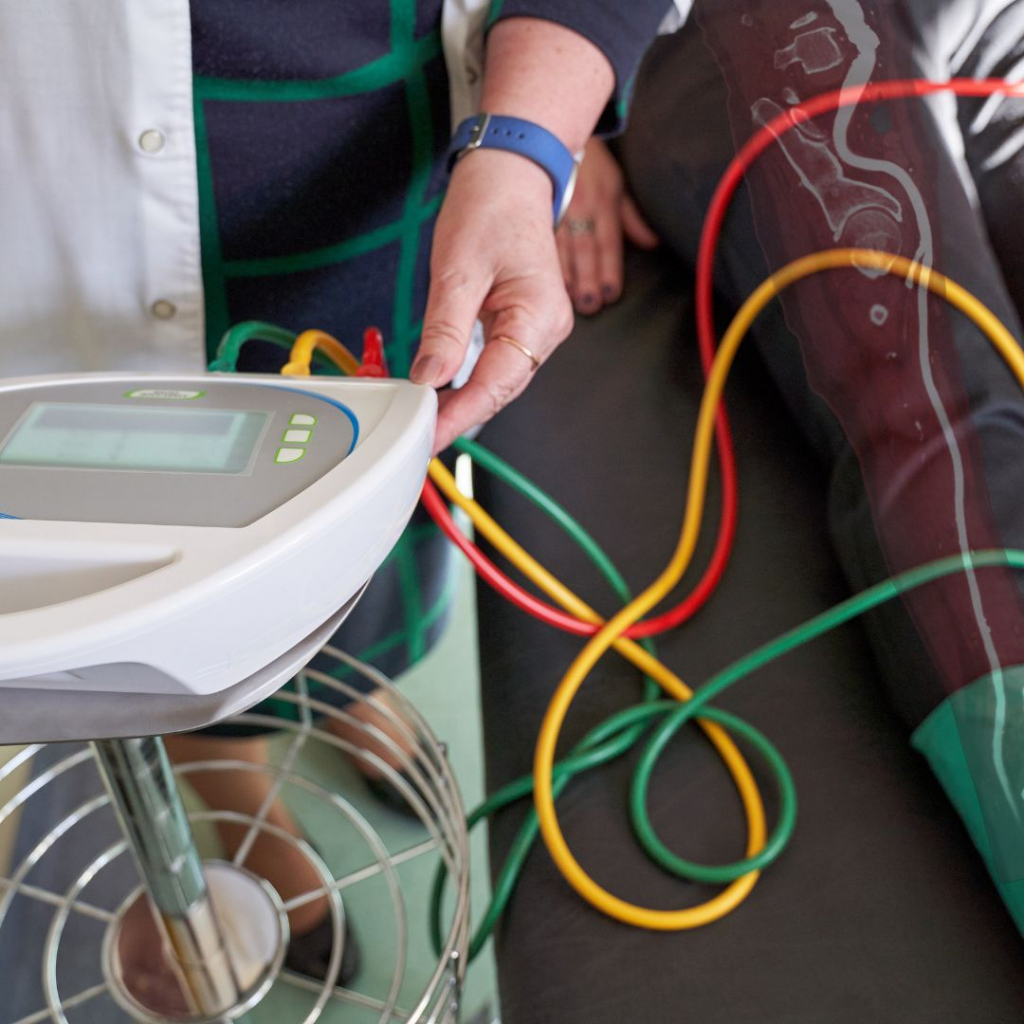
A vascular evaluation typically starts with a thorough review of your symptoms and medical history, followed by a physical exam and noninvasive testing.
The Ankle-Brachial Index (ABI) Test
The ankle-brachial index (ABI) test compares blood pressure at the ankle to blood pressure at the arm. A lower reading at the ankle compared to the arm can indicate narrowing or blockage in the arteries supplying the legs.[2] The test is noninvasive and can be completed during a single clinic visit. It is one of the more reliable tools for assessing whether arterial circulation is contributing to leg symptoms.
Additional Diagnostic Testing
If results suggest reduced arterial blood flow, a vascular specialist may use imaging such as ultrasound to visualize the arteries and identify where narrowing has occurred. These tests help confirm whether PAD is contributing to symptoms and, if so, how significant the narrowing is – information that guides decisions about next steps in care.
Treatment Options When PAD Is the Cause
When a vascular evaluation confirms that reduced arterial circulation is contributing to leg tingling or numbness, treatment options depend on the severity of the narrowing and the patient’s overall health.
Lifestyle modifications – including supervised walking programs, quitting smoking, and managing blood pressure and cholesterol – can support circulation and may ease mild symptoms. For more significant narrowing, a vascular specialist may discuss minimally invasive, image-guided procedures. These can include angioplasty (a small balloon that helps restore blood flow through a narrowed artery), stent placement (which keeps the artery open after angioplasty), or atherectomy (which removes plaque from the artery wall).[5] These outpatient procedures do not require open surgery and are performed with image guidance.
Not every patient with leg tingling is a candidate for these procedures. A full vascular evaluation is the first step in understanding the cause and determining whether any intervention may be appropriate for your situation.
Next step
Leg tingling that keeps coming back deserves a closer look.
Recurring tingling or numbness in the legs – especially when it follows a pattern tied to activity or comes with skin changes – may be connected to circulation rather than a nerve issue alone.
A vascular specialist can help determine whether reduced arterial blood flow is contributing to your symptoms and outline options tailored to your situation.
FAQs About Leg Tingling and Numbness
- National Heart, Lung, and Blood Institute. Peripheral Artery Disease. nhlbi.nih.gov/health/peripheral-artery-disease
- Mayo Clinic. Peripheral artery disease (PAD) – Symptoms and causes. mayoclinic.org/diseases-conditions/peripheral-artery-disease/symptoms-causes/syc-20350557
- Mayo Clinic. Peripheral neuropathy – Symptoms and causes. mayoclinic.org/diseases-conditions/peripheral-neuropathy/symptoms-causes/syc-20352061
- Healthline. Numbness in Legs and Feet: Causes, Symptoms, and Treatment. healthline.com/health/fibromyalgia/numbness-in-legs-and-feet
- American Heart Association. Peripheral Artery Disease (PAD). heart.org/en/health-topics/peripheral-artery-disease
Medical disclaimer: This content is provided for educational purposes only and is not a substitute for professional medical advice, diagnosis, or treatment. Always consult a qualified vascular specialist regarding any questions about your circulatory health.